
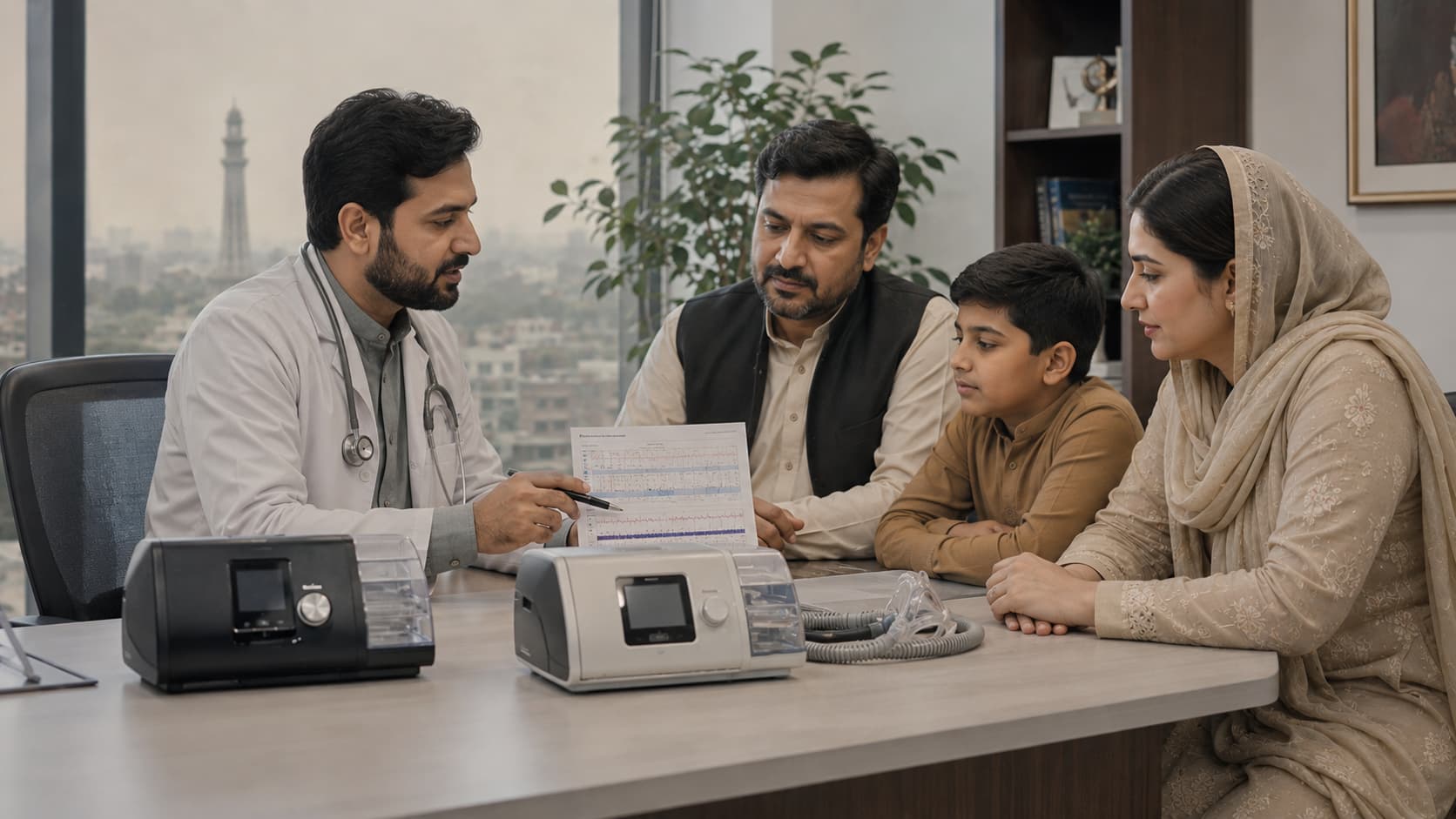
You leave the doctor’s clinic with a prescription in your hand and more questions than answers. Someone mentioned a CPAP machine. Someone else said BiPAP. Your father has sleep apnea. Your husband has COPD. The doctor seemed confident, but now you are home, searching online and wondering what any of it actually means. The good news is that this confusion is completely normal. By the time you finish reading, you will understand what CPAP and BiPAP machines do, who needs each one, and how to take the next step with confidence.
What is a CPAP machine and how does it work?
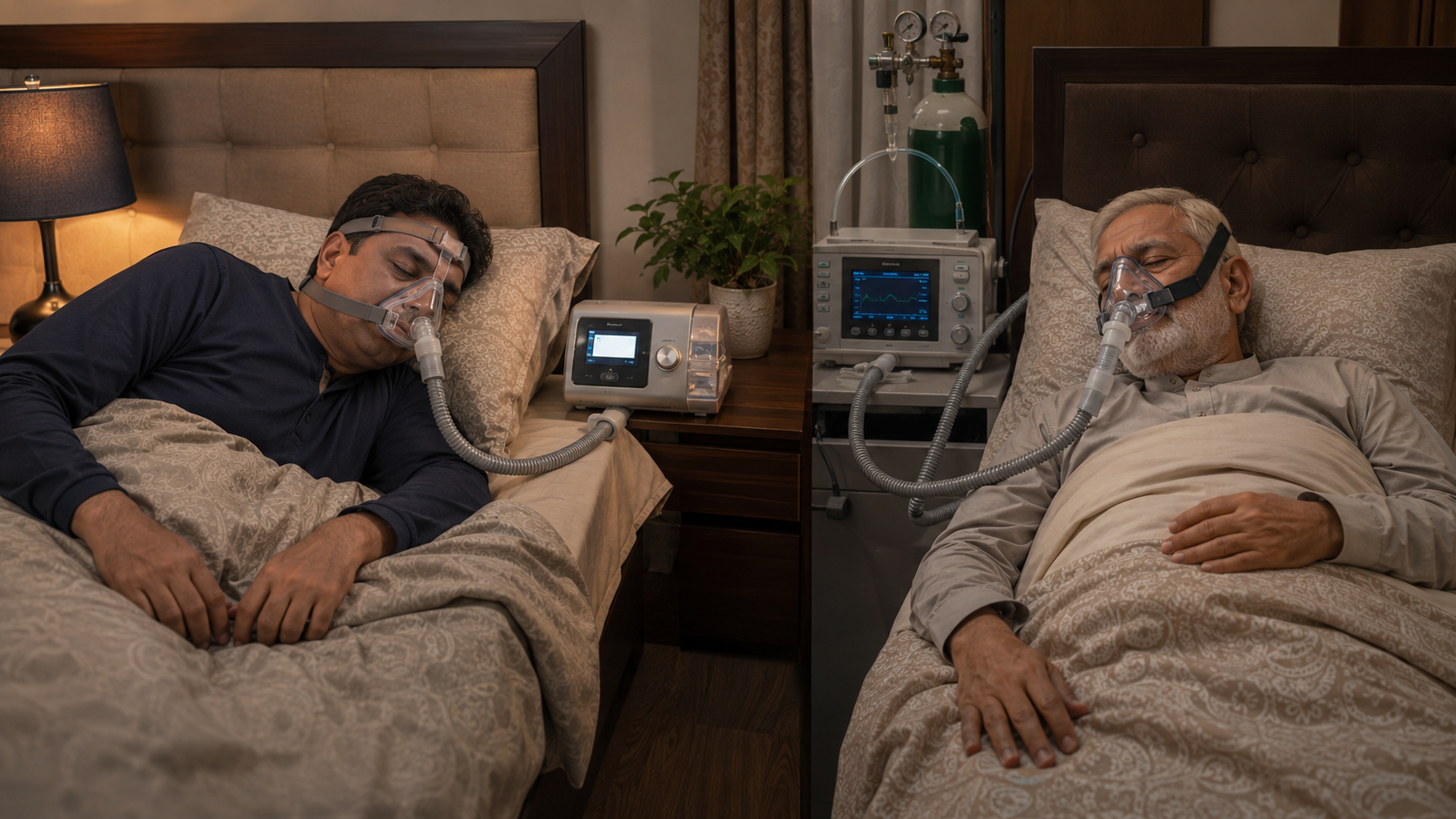
What exactly does a CPAP machine do while you sleep? CPAP stands for Continuous Positive Airway Pressure. That sounds technical, but the idea is simple. The machine gently pushes a steady stream of air through a mask while you sleep. That airflow helps keep your airway open so breathing does not stop or become restricted during the night. Think of it this way. Imagine a water pipe in your home that keeps collapsing under pressure. A CPAP machine works like a steady pump that keeps the pipe open so water can flow smoothly. In the same way, the machine keeps your airway open so air can move freely.
Sleep medicine specialists typically recommend CPAP therapy for people with mild to moderate obstructive sleep apnea. Obstructive sleep apnea occurs when throat muscles relax too much during sleep and block airflow. CPAP can also help people who snore heavily or have upper airway resistance syndrome, where breathing becomes difficult even without complete airway blockage. A retired school teacher in Lahore recently came to Respiratory Zone after years of loud snoring that kept the entire household awake. Her sleep study showed moderate sleep apnea. A CPAP machine in pakistan helped restore normal breathing patterns and improved her sleep quality significantly.
What is a BiPAP machine and how is it different?
So why would a doctor prescribe a BiPAP instead? BiPAP stands for Bilevel Positive Airway Pressure. Unlike CPAP, which delivers one constant pressure, a BiPAP machine provides two different pressure levels. One pressure supports breathing in, while the other supports breathing out. These two settings are called IPAP and EPAP. IPAP stands for Inspiratory Positive Airway Pressure, which helps during inhalation. EPAP stands for Expiratory Positive Airway Pressure, which helps during exhalation.
Here is what that means for you. When you breathe in, the machine delivers higher pressure to assist airflow. When you breathe out, the pressure decreases, making exhalation feel easier and more natural. Many patients with serious breathing conditions find this far more comfortable than breathing against one fixed pressure all night. Respiratory physicians generally advise BiPAP therapy for severe sleep apnea, COPD, obesity hypoventilation syndrome, central sleep apnea, and some forms of respiratory failure requiring nighttime breathing support.
Consider a factory worker in Karachi who spent years around dust and industrial particles. After developing advanced COPD, he found that CPAP pressure felt difficult to exhale against. His doctor switched him to BiPAP therapy, which better matched his breathing needs and improved overnight oxygen levels.
CPAP vs BiPAP in Pakistan: the key differences at a glance
What is the single biggest difference between these machines? The single biggest difference between the two machines is pressure delivery. CPAP provides one continuous pressure throughout the entire breathing cycle. BiPAP provides two separate pressures, one for inhaling and one for exhaling.
That difference affects comfort, treatment goals, and suitability. For many sleep apnea patients, CPAP works perfectly well. The machine is simple, effective, and widely prescribed. A patient whose sleep study shows moderate airway collapse often needs nothing more complicated. BiPAP serves a different purpose. It supports people whose lungs or breathing muscles need extra help. Someone in Islamabad with COPD whose oxygen levels drop significantly during sleep often benefits from BiPAP rather than CPAP because the machine actively reduces breathing effort.
You should also know that BiPAP machines generally cost more because they contain more advanced pressure-control technology. If your doctor prescribed a pressure setting above 15 cm H2O, you are almost certainly looking at a BiPAP rather than a standard CPAP. Clinical guidelines suggest that many patients find high CPAP pressures uncomfortable, making bilevel therapy a better option.The right machine is not the more expensive machine. It is the machine that matches your diagnosis and prescribed therapy requirements.
How do you know which one your doctor is recommending?
You are not alone. The easiest clue is the pressure settings written on the prescription. A CPAP prescription usually shows one pressure number. For example, it may say “CPAP 10 cm H2O.” That single number represents the constant airflow pressure delivered throughout the night. A BiPAP prescription typically shows two numbers. You might see something like “IPAP 16 cm H2O, EPAP 8 cm H2O.” Those two numbers represent separate inhale and exhale pressures. Most doctors determine these settings through a sleep study, also called polysomnography. During this overnight test, specialists monitor breathing patterns, oxygen levels, heart rate, and sleep quality.
You may also hear about the AHI, or Apnea-Hypopnea Index. This measures how many breathing interruptions occur each hour. Lower AHI scores often respond well to CPAP therapy. Higher AHI scores, particularly when combined with low oxygen levels or complex breathing disorders, may lead physicians toward BiPAP therapy. Let us be clear about one thing.
CPAP and BiPAP machine prices in Pakistan: what to expect
How much should you realistically expect to spend? Prices vary considerably based on features, manufacturer, and machine type. A basic CPAP machine usually costs less than a BiPAP machine because it uses simpler pressure technology. When researching CPAP machine price in Pakistan, you will notice a wide range. Entry-level devices generally cost less than machines that include advanced comfort features, integrated humidifiers, wireless monitoring, or automatic pressure adjustment systems known as APAP devices.
BiPAP machines typically sit at the higher end of the price range because they provide more sophisticated breathing support. Auto-adjusting BiPAP units often cost even more. The good news is that purchasing is not always the only option. Respiratory Zone offers both rental and purchase options. This helps families who want to try therapy before making a long-term commitment or who need temporary respiratory support while managing a limited budget.
Why choose Respiratory Zone for your CPAP or BiPAP in Pakistan?
Respiratory Zone provides trained respiratory care staff seven days a week to guide patients and caregivers through machine selection, setup, and daily use. Families often need reassurance during the first few nights of therapy, and having someone available makes a genuine difference.
The company offers same-day and 24-hour delivery across Lahore, Karachi, and Islamabad. Rental and purchase options are available for both CPAP and BiPAP machines. Ongoing support continues after delivery so patients can feel confident using their equipment safely and correctly.
Final Thoughts
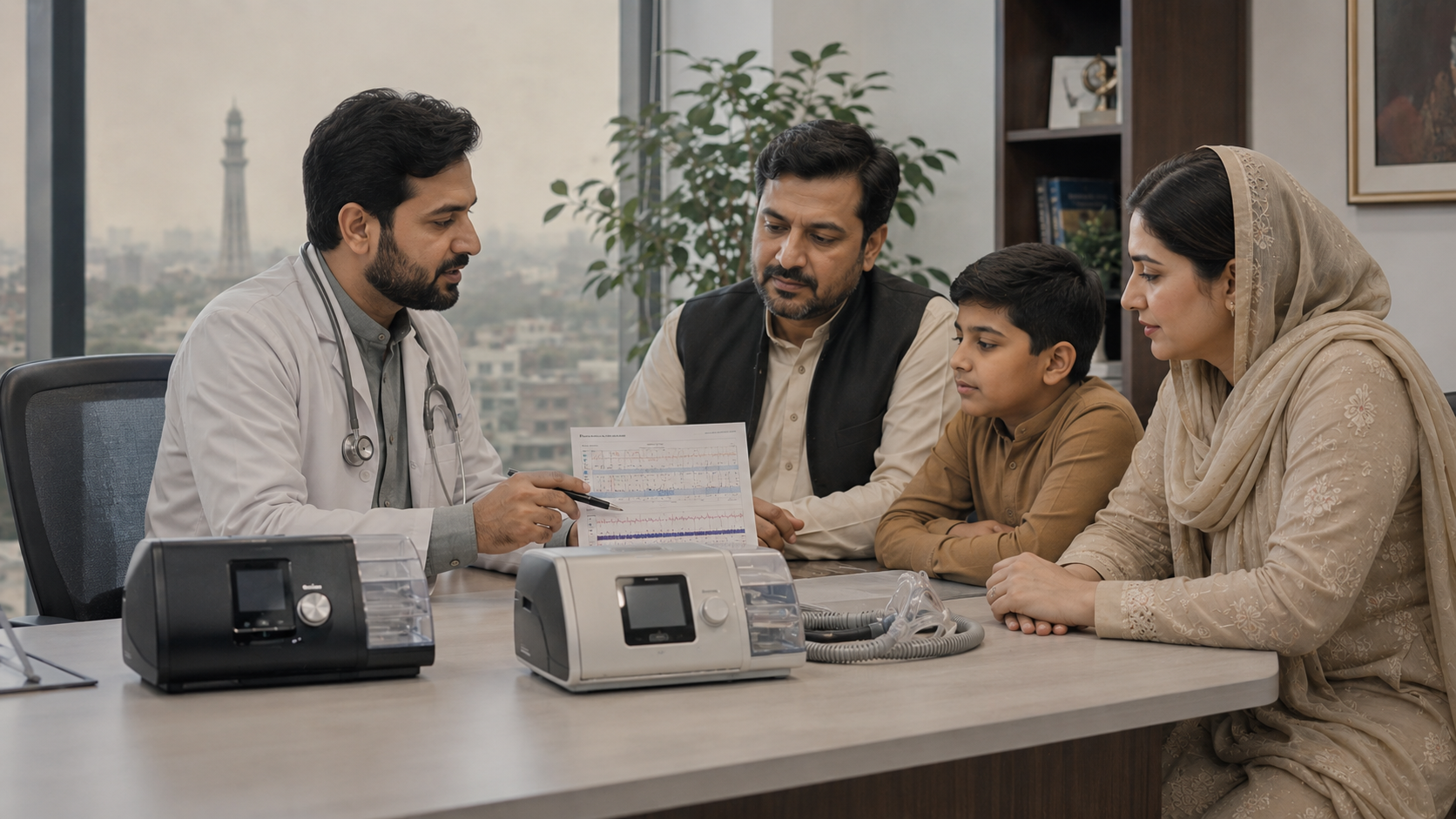
When you first started reading, CPAP and BiPAP may have felt like confusing medical terms. Now you know the difference, why your doctor recommended a specific machine, and what questions to ask before making a decision. Choosing the right breathing machine is one of the most important healthcare decisions a family can make, and getting it right matters. Always follow your doctor’s guidance. Call us on +92 319 2004 884 or visit respiratoryzone.pk — our team is ready to help you find the right machine for your family, today.
Disclaimer: This article is for informational purposes only. Always consult a qualified medical professional before purchasing or using any respiratory device.